


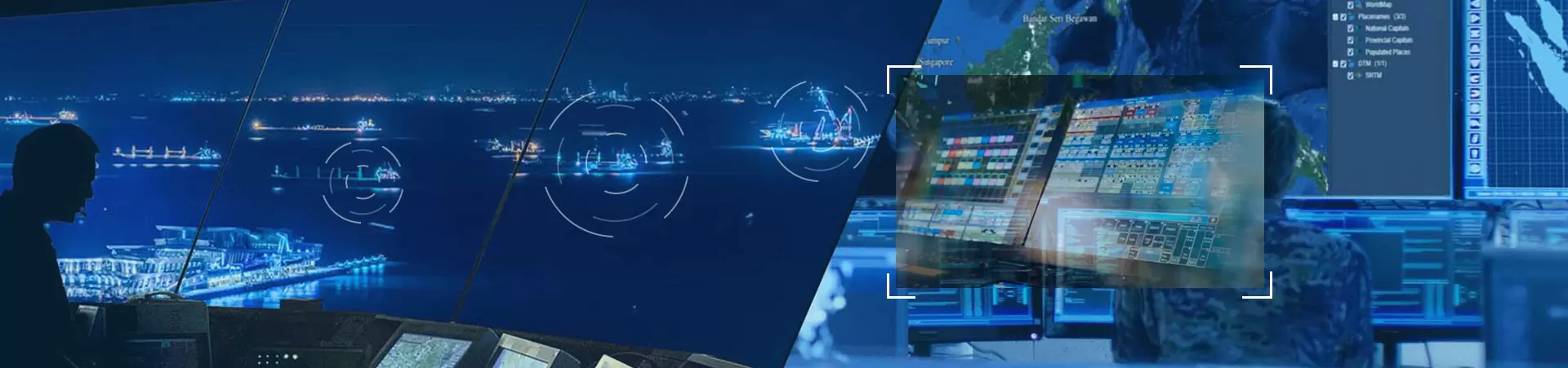
The anti-drone platform is an integrated system of "detection - identification - tracking - disposal - assessment", which needs to cover the entire process from low-altitude micro target early warning to precise countermeasures. Its core functions should be adapted to the needs of different scenarios (military, security, parks, airports), and can be specifically divided into five core modules:
1. Multi-dimensional detection and early warning function
This is the first line of defense against drones, with the goal of achieving "early detection and no blind spots". It is necessary to integrate multiple detection methods to eliminate blind spots:
Radar detection
Core indicators: Covering 0-5km low-altitude and ultra-low-altitude areas, capable of detecting tiny targets with RCS≤0.01m² (such as consumer-grade drones), supporting 360° omnidirectional scanning or directional warning, and possessing anti-noise and anti-interference capabilities.
Compatible radars: small phased array radar, millimeter-wave radar, Doppler radar, which can distinguish unmanned aerial vehicles from interfering targets such as birds and balloons.
Photoelectric detection

Dual-mode linkage of visible light and infrared thermal imaging enables all-weather monitoring during both day and night. It can automatically track and lock onto drones and output high-definition images for identification.
Auxiliary functions: Automatic zoom, pan-tilt image stabilization, and support for radar linkage (radar guides the photoelectric device to precisely point to the target).
Radio detection
Scan the commonly used frequency bands of drones (2.4GHz/5.8GHz/remote control link), locate the position of the drone pilot, identify the drone model (such as DJI series), and simultaneously monitor the video transmission and remote control signals of the drone.
Extended functions: Supports the detection of frequency-hopping and encrypted signals to handle professional-grade drones with anti-interference capabilities.
Acoustic/laser-assisted detection
Acoustic sensor: Identifies targets through the characteristic noise of the drone's propeller, suitable for radar blind spots (such as between forests and buildings).
Lidar: High-precision three-dimensional positioning, suitable for precise tracking at short distances (0-1km).
2. Intelligent recognition and target classification functions
To avoid "misjudgment and wrong calls", the key lies in accurately distinguishing between legal and illegal targets
Target feature recognition
Based on AI algorithms, the shape, flight trajectory and signal features of unmanned aerial vehicles (UAVs) are extracted to distinguish between consumer-grade UAVs, industrial-grade UAVs and unlicensed UAVs, while eliminating interference from birds, kites, balloons, etc.
Identity verification
Connect to the real-name registration system for unmanned aerial vehicles (UAVs), identify the identity marks of legally registered UAVs (such as electronic fences and flight control codes), and automatically issue alerts for illegal intrusions into targets.
Threat level assessment
Based on the flight altitude, speed, distance and payload type of the unmanned aerial vehicle (UAV) (whether it is carrying suspicious items), the threat level is automatically classified as low, medium or high, triggering different levels of response plans.
Iii. Precise tracking and positioning function
Ensure that the target is "not lost" throughout the process to provide precise coordinates for subsequent handling:
Multi-source data fusion tracking
Radar, electro-optical and radio detection data are linked. Through data fusion algorithms, the target trajectory is corrected to eliminate the error of a single device and achieve continuous and stable tracking (even if the target is briefly occluded, it can be quickly recaptured).
Pilot positioning
Through radio direction finding (such as Angle of arrival AOA and time difference of arrival TDOA), the position of the drone operator can be precisely located, with a positioning accuracy of ≤10 meters (for short distances), supporting rapid response by ground personnel.
4. Hierarchical and graded countermeasures and handling functions
The core is "non-destructive priority and precise controllability". Different countermeasures should be selected based on the threat level to avoid collateral damage.
Soft Kill Countermeasure (Preferred, suitable for civilian/security scenarios)
Radio interference suppression: Directional/omnidirectional interference with the remote control, video transmission, and navigation links (GPS/Beidou) of unmanned aerial vehicles (UAVs), forcing them to hover, return, or make emergency landings. The interference range should cover 0-3 kilometers and avoid interfering with nearby legitimate communications (such as mobile phones and base stations).
Navigation deception: Simulating GPS/Beidou signals, guiding drones to land in designated areas, suitable for scenarios where drones need to be captured for evidence collection.
Hard kill countermeasures (suitable for high-threat scenarios, such as military/airport)
Laser interception: Low-power lasers blind the photoelectric payloads of drones, while high-power lasers burn out the power systems of drones. It features fast response speed, high accuracy, and no ammunition consumption.
Drone countermeasure net/capture device: By launching net bombs and attaching capture devices to drones, it physically captures low-altitude and low-speed drones, suitable for close-range (0-500m) disposal.
Air defense weapon linkage: Docking with small air defense missiles and anti-aircraft guns to deal with large, high-speed and high-risk unmanned aerial vehicles (such as reconnaissance and strike integrated unmanned aerial vehicles).
Electronic fences and Area Control
Preset no-fly zones, automatically trigger alarms and interference for intruding drones, and support linkage with the security systems of airports and parks (such as access control and surveillance cameras).
V. Effect Evaluation and System Linkage Function
Form a countermeasure closed loop to ensure effective and traceable handling:
Evaluation of countermeasures' effectiveness
Real-time monitoring of the status of the unmanned aerial vehicle (whether it returns/makes an emergency landing/crashes), and output a disposal result report (target model, disposal time, disposal method).
Multi-platform linkage
Connect with the command center, security system and public security system to automatically push alarm information, target trajectories and pilot positions. Support the networking of multiple anti-drone platforms to achieve large-scale regional joint prevention and control.
Data recording and traceability
The entire process records the detection data, handling procedures, and target images for post-event review, evidence collection, and legal accountability.