سوقأخبارCore Development Trends of Anti-UAV Radar Industry 1. Technical Trend: AI Intelligence + Precise Micro-Doppler Recognition, Solving the Problem of False Alarms The biggest drawback of traditional radars is their vulnerability to interference from birds and clutter. The new generation of anti-drone radars are fully equipped with AI algorithms + micro-Doppler feature recognition technology. By extracting the unique spectral characteristics of the drone's rotor, they can accurately distinguish drones from natural interference objects. At the same time, relying on real-time data processing, it can achieve automatic target classification, intelligent trajectory prediction, and batch tracking of multiple targets, significantly reducing the pressure of manual assessment. It is suitable for complex electromagnetic environments in cities and outdoors, and is the core direction of current technological iterations both domestically and internationally. 2. Architecture Trend: Miniaturization of Single Equipment + Collaborative Networking at All Levels Equipment presents two major iterative directions: One is the lightweighting of individual soldiers/vehicles, discarding the traditional large-scale fixed radar form. The equipment becomes smaller, has lower power consumption, and is easier to deploy, capable of being adapted for mobile deployment on armored vehicles and rapid temporary defense, meeting the requirements for mobile operations and temporary security protection in the field; The other is the normalization of radar networking. Through the coordinated networking of multiple devices, it eliminates detection blind spots and achieves wide-area and all-encompassing coverage. In China, the construction of low-altitude radar networking platforms in key urban clusters such as Beijing-Tianjin-Hebei, Yangtze River Delta, and Guangdong-Hong Kong-Macao has been accelerated. Russia is also promoting multi-radar networking linkage to enable a single operator to control multiple devices and achieve large-scale collaborative detection. 3. Performance Trend: Anti-interference Upgrade + Multi-layer Detection Fusion for Both Long and Short Distances In response to new threats such as electromagnetic interference in modern battlefields, the coordinated attack of drone swarms, and low-altitude assaults by patrol missiles, anti-drone radars continue to enhance their anti-interference capabilities in complex electromagnetic environments. At the same time, they maintain the "far, medium, and near layered detection" concept, integrating long-range early warning radars, medium-range tracking radars, and near-range high-precision security radars to establish a multi-layered and three-dimensional detection system. This system takes into account both long-range early warning and close-range precise interception, and is suitable for military high-end defense and protection scenarios of national-level key facilities. 4. Application Trends: Bidirectional Penetration between Military and Civil Uses, Compliance Needs Surge Military Sector: The battlefield has shifted from single detection to an integrated closed-loop defense system combining "radar detection and firepower/interference linkage". Rapid response and cluster confrontation capabilities have become the core indicators. The US military and Russian military have been continuously purchasing new types of tactical anti-drone radars, driving the iterative upgrade of military equipment. Civil Sector: With the standardized development of domestic low-altitude economy, black flight control and airspace security supervision have become mandatory requirements. Regular low-altitude security procurement for large-scale events, energy infrastructure, and urban parks has continued to be implemented. Anti-drone radars have transformed from "emergency security equipment" to a standard for urban low-altitude infrastructure. 5. Industry Trends: Acceleration of Domestic Replacement, Continuous Cost Reduction Domestic anti-drone radars have established an industry pattern where state-owned enterprises undertake technological breakthroughs and private enterprises implement market-oriented deployments. Core chips, phased array antennas, and algorithms have been continuously domesticated, breaking the technological monopoly of overseas entities. The iterative domesticization process has led to a significant reduction in equipment costs, making large-scale networking and widespread deployment possible, and further opening up the civilian market penetration space.

Core Development Trends of Anti-UAV Radar Industry 1. Technical Trend: AI Intelligence + Precise Micro-Doppler Recognition, Solving the Problem of False Alarms The biggest drawback of traditional radars is their vulnerability to interference from birds and clutter. The new generation of anti-drone radars are fully equipped with AI algorithms + micro-Doppler feature recognition technology. By extracting the unique spectral characteristics of the drone's rotor, they can accurately distinguish drones from natural interference objects. At the same time, relying on real-time data processing, it can achieve automatic target classification, intelligent trajectory prediction, and batch tracking of multiple targets, significantly reducing the pressure of manual assessment. It is suitable for complex electromagnetic environments in cities and outdoors, and is the core direction of current technological iterations both domestically and internationally. 2. Architecture Trend: Miniaturization of Single Equipment + Collaborative Networking at All Levels Equipment presents two major iterative directions: One is the lightweighting of individual soldiers/vehicles, discarding the traditional large-scale fixed radar form. The equipment becomes smaller, has lower power consumption, and is easier to deploy, capable of being adapted for mobile deployment on armored vehicles and rapid temporary defense, meeting the requirements for mobile operations and temporary security protection in the field; The other is the normalization of radar networking. Through the coordinated networking of multiple devices, it eliminates detection blind spots and achieves wide-area and all-encompassing coverage. In China, the construction of low-altitude radar networking platforms in key urban clusters such as Beijing-Tianjin-Hebei, Yangtze River Delta, and Guangdong-Hong Kong-Macao has been accelerated. Russia is also promoting multi-radar networking linkage to enable a single operator to control multiple devices and achieve large-scale collaborative detection. 3. Performance Trend: Anti-interference Upgrade + Multi-layer Detection Fusion for Both Long and Short Distances In response to new threats such as electromagnetic interference in modern battlefields, the coordinated attack of drone swarms, and low-altitude assaults by patrol missiles, anti-drone radars continue to enhance their anti-interference capabilities in complex electromagnetic environments. At the same time, they maintain the "far, medium, and near layered detection" concept, integrating long-range early warning radars, medium-range tracking radars, and near-range high-precision security radars to establish a multi-layered and three-dimensional detection system. This system takes into account both long-range early warning and close-range precise interception, and is suitable for military high-end defense and protection scenarios of national-level key facilities. 4. Application Trends: Bidirectional Penetration between Military and Civil Uses, Compliance Needs Surge Military Sector: The battlefield has shifted from single detection to an integrated closed-loop defense system combining "radar detection and firepower/interference linkage". Rapid response and cluster confrontation capabilities have become the core indicators. The US military and Russian military have been continuously purchasing new types of tactical anti-drone radars, driving the iterative upgrade of military equipment. Civil Sector: With the standardized development of domestic low-altitude economy, black flight control and airspace security supervision have become mandatory requirements. Regular low-altitude security procurement for large-scale events, energy infrastructure, and urban parks has continued to be implemented. Anti-drone radars have transformed from "emergency security equipment" to a standard for urban low-altitude infrastructure. 5. Industry Trends: Acceleration of Domestic Replacement, Continuous Cost Reduction Domestic anti-drone radars have established an industry pattern where state-owned enterprises undertake technological breakthroughs and private enterprises implement market-oriented deployments. Core chips, phased array antennas, and algorithms have been continuously domesticated, breaking the technological monopoly of overseas entities. The iterative domesticization process has led to a significant reduction in equipment costs, making large-scale networking and widespread deployment possible, and further opening up the civilian market penetration space.

Time of release: 2026-06-17 12:06:06

1. Technical Trend: AI Intelligence + Precise Micro-Doppler Recognition, Solving the Problem of False Alarms
The biggest drawback of traditional radars is their vulnerability to interference from birds and clutter. The new generation of anti-drone radars are fully equipped with AI algorithms + micro-Doppler feature recognition technology. By extracting the unique spectral characteristics of the drone's rotor, they can accurately distinguish drones from natural interference objects. At the same time, relying on real-time data processing, it can achieve automatic target classification, intelligent trajectory prediction, and batch tracking of multiple targets, significantly reducing the pressure of manual assessment. It is suitable for complex electromagnetic environments in cities and outdoors, and is the core direction of current technological iterations both domestically and internationally.


2. Architecture Trend: Miniaturization of Single Equipment + Collaborative Networking at All Levels
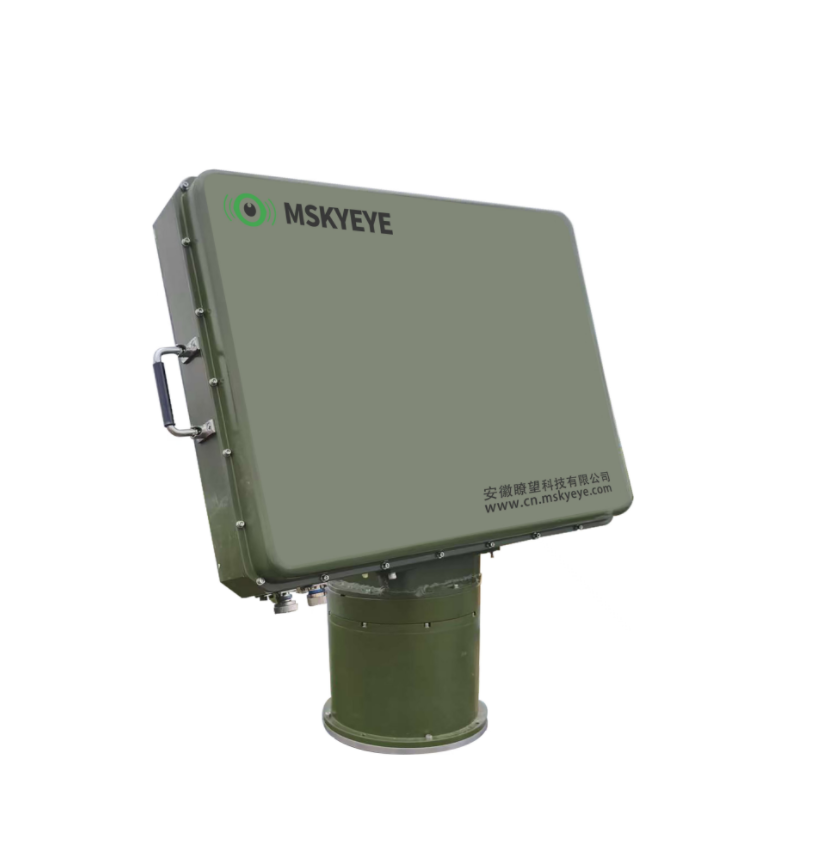
Equipment presents two major iterative directions: One is the lightweighting of individual soldiers/vehicles, discarding the traditional large-scale fixed radar form. The equipment becomes smaller, has lower power consumption, and is easier to deploy, capable of being adapted for mobile deployment on armored vehicles and rapid temporary defense, meeting the requirements for mobile operations and temporary security protection in the field; The other is the normalization of radar networking. Through the coordinated networking of multiple devices, it eliminates detection blind spots and achieves wide-area and all-encompassing coverage. In China, the construction of low-altitude radar networking platforms in key urban clusters such as Beijing-Tianjin-Hebei, Yangtze River Delta, and Guangdong-Hong Kong-Macao has been accelerated. Russia is also promoting multi-radar networking linkage to enable a single operator to control multiple devices and achieve large-scale collaborative detection.

3. Performance Trend: Anti-interference Upgrade + Multi-layer Detection Fusion for Both Long and Short Distances
In response to new threats such as electromagnetic interference in modern battlefields, the coordinated attack of drone swarms, and low-altitude assaults by patrol missiles, anti-drone radars continue to enhance their anti-interference capabilities in complex electromagnetic environments. At the same time, they maintain the "far, medium, and near layered detection" concept, integrating long-range early warning radars, medium-range tracking radars, and near-range high-precision security radars to establish a multi-layered and three-dimensional detection system. This system takes into account both long-range early warning and close-range precise interception, and is suitable for military high-end defense and protection scenarios of national-level key facilities.

4. Application Trends: Bidirectional Penetration between Military and Civil Uses, Compliance Needs Surge
Military Sector: The battlefield has shifted from single detection to an integrated closed-loop defense system combining "radar detection and firepower/interference linkage". Rapid response and cluster confrontation capabilities have become the core indicators. The US military and Russian military have been continuously purchasing new types of tactical anti-drone radars, driving the iterative upgrade of military equipment.
Civil Sector: With the standardized development of domestic low-altitude economy, black flight control and airspace security supervision have become mandatory requirements. Regular low-altitude security procurement for large-scale events, energy infrastructure, and urban parks has continued to be implemented. Anti-drone radars have transformed from "emergency security equipment" to a standard for urban low-altitude infrastructure.

5. Industry Trends: Acceleration of Domestic Replacement, Continuous Cost Reduction
Domestic anti-drone radars have established an industry pattern where state-owned enterprises undertake technological breakthroughs and private enterprises implement market-oriented deployments. Core chips, phased array antennas, and algorithms have been continuously domesticated, breaking the technological monopoly of overseas entities. The iterative domesticization process has led to a significant reduction in equipment costs, making large-scale networking and widespread deployment possible, and further opening up the civilian market penetration space.